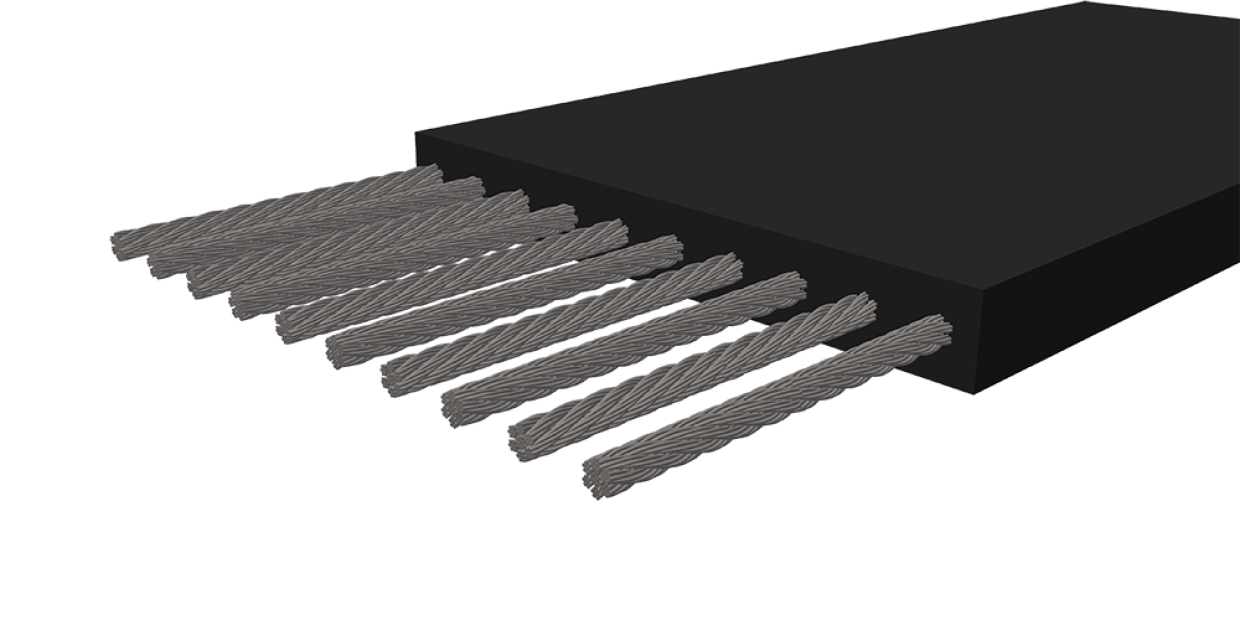
In the realm of industrial and mining sectors, conveyor belts are pivotal for efficient material handling. Among the various types, steel cord conveyor belts are renowned for their superior strength, durability, and ability to withstand harsh operating conditions. Understanding the construction of these belts is essential for industry professionals seeking to leverage their benefits effectively.
The Core of Steel Cord Conveyor Belts
The core of a steel cord conveyor belt is composed of high-tensile steel wires. These wires are arranged in a parallel fashion, providing the necessary longitudinal strength required for carrying heavy loads over long distances. The steel cords are coated with zinc for corrosion resistance, further extending the belt’s lifespan in challenging environments.
Key Features of Steel Cords
- High tensile strength: Ensures the belt can support substantial weights without stretching.
- Flexibility: Allows the belt to maneuver around curves and angles with ease.
- Corrosion resistance: Protects the cords from environmental degradation.
Layering and Covering
Above and below the steel cord layer, rubber coverings are applied. These layers serve multiple functions:
- Protection of the steel cords from physical damage and environmental elements.
- Providing a friction surface for materials being transported.
- Enhancing the belt’s overall durability and longevity.
Advanced manufacturing techniques ensure that the rubber coverings are tightly bonded to the steel cords, a critical aspect in steel cord conveyor belt construction, to prevent delamination under stress.
Splicing and Jointing
One of the most technical aspects of steel cord conveyor belt installation is the splicing and jointing process. This ensures that the belt operates seamlessly and maintains its structural integrity during operation.
- Mechanical splicing involves fastening the ends with metal fasteners, offering a quick and easy solution.
- Vulcanization, a more complex method, involves heat and pressure to bond the ends, providing a stronger joint.
The choice between these methods depends on the specific application requirements and operational conditions.
Applications and Advantages
Steel cord conveyor belts are employed in various industries, including mining, construction, and ports. Their advantages include:
- Longer service life due to robust construction.
- Ability to cover extensive distances without sagging.
- Reduced maintenance costs due to higher durability.
These attributes make steel cord conveyor belts an indispensable component in industries where efficiency and reliability are paramount.
Conclusion
The construction of steel cord conveyor belts is a sophisticated process that ensures their capability to meet the demanding requirements of heavy-duty applications. By understanding the intricate details of their construction and the benefits they offer, industry professionals can make informed decisions when selecting the appropriate conveyor belt for their needs. For further insights and detailed specifications, exploring resources on steel cord conveyor belt construction is recommended.